The Thermodynamics of Illusion: The Perfect Algorithm and the Faulty Hardware of Modern Economics
by Mik Petrov
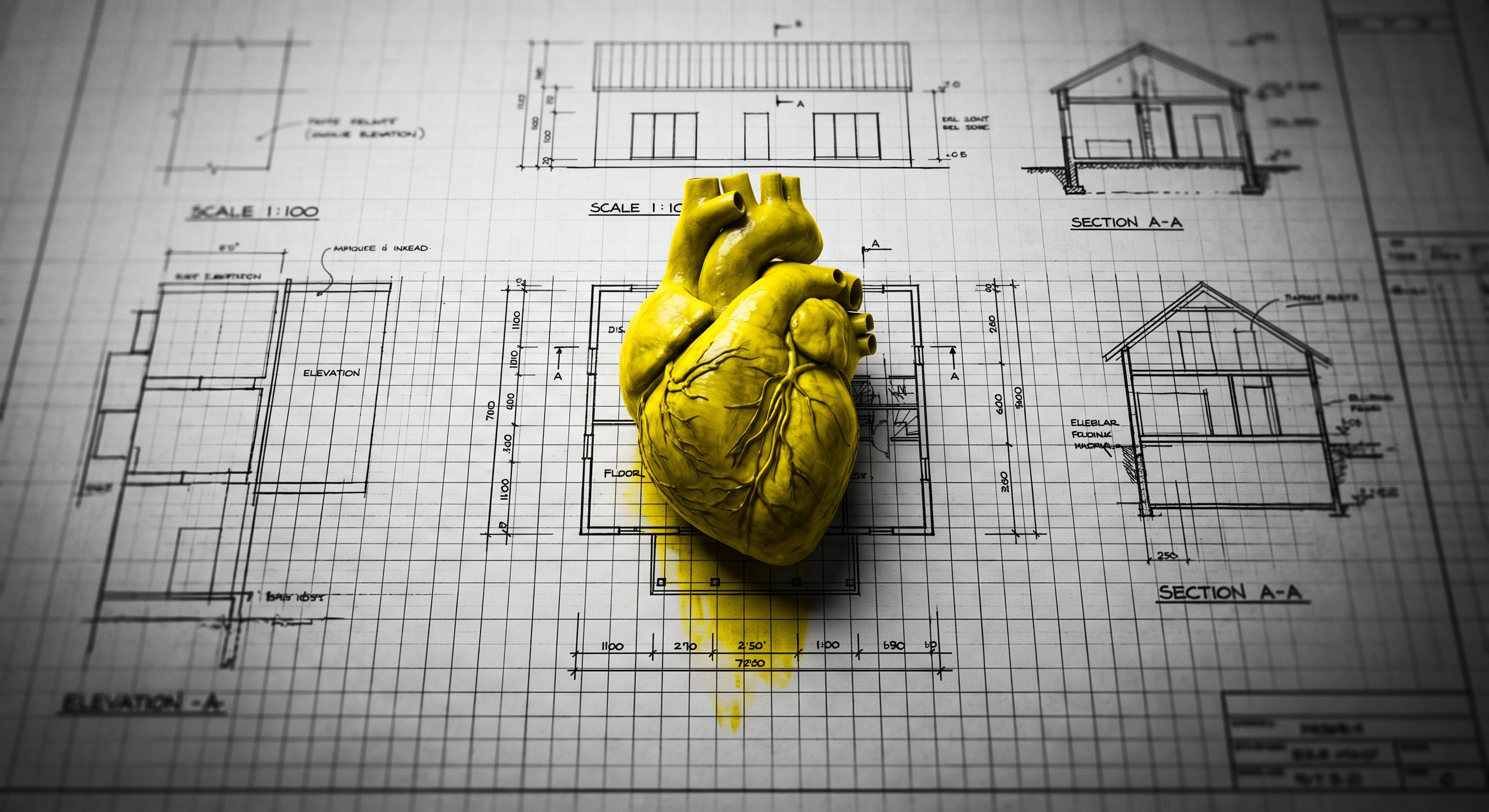
From the second half of the twentieth century to the present day, economics has ceased to be a humanistic science and has desperately attempted to become a branch of physics. If we observe the sequence of the greatest Nobel laureates—from Arrow to Debreu, from Friedman to Lucas, up to the synthesis of the New Keynesians—we see a single, grand, and tragic effort: to write the Equation of Everything. To find the mathematical formula to zero out crises, defeat inflation, and guarantee perpetual prosperity.
These brilliant minds mapped the engine of humanity with ballistic precision. They wrote the perfect software. And yet, our economies continue to crash against the wall of inflation, speculative bubbles, and sudden recessions. Why?
The citizen on the right blames too many regulations. The citizen on the left blames the greed of finance. The expert blames "external shocks."
The truth is not political. It is structural.
The economics of the twentieth century failed because it committed the most serious error of systems engineering: it designed an infallible software while pretending to run it on the most unstable, hormonal, and entropic hardware in the universe: human biology.
Let us translate this disaster into the language of systems physics, analyzing the dogmas of modern economics to understand how Artificial Intelligence is the only way to finally make them real.
- Arrow, Debreu, and the Utopia of General Equilibrium (The Absence of Friction)
In the 1950s, Kenneth Arrow and Gérard Debreu mathematically demonstrated that General Equilibrium existed. They wrote an unassailable theorem to prove that, in a free market, prices always adjust to perfectly balance supply and demand for every single good.
Translated into thermodynamics: Arrow and Debreu designed a zero-entropy, zero-friction system where energy (value) flows instantaneously and perfectly between the nodes of the network.
But there was a lethal bug in the premises. Their model assumed that the human being was a purely rational agent (the homo economicus), endowed with perfect information and capable of calculating every variable effortlessly.
But we know that Carbon (man) does not work that way. The ordinary man, as the mystic G.I. Gurdjieff reminds us, is not an infallible calculator, but a sleeping machine, dominated by mechanical reactions and divided into multiple contradictory "I's." Man does not have access to perfect information; he gets anxious, he gets caught up in the euphoria of the herd or in terror. Arrow and Debreu had designed the map of an ideal world, but one inhabited by imaginary beings.
- Milton Friedman and Monetarism: Fuel and Operator Panic
Then came Milton Friedman. He understood that the system was subject to overheating (inflation) and identified the culprit: excess money. For Friedman, inflation was "always and everywhere a monetary phenomenon." His solution? The Central Bank should limit itself to increasing the money supply at a fixed, constant rate. No creative interventions. No politics.
In physical terms, Friedman had understood that money is the energy (the fuel) of the system. If you inject too much into an engine running at a fixed speed, the excess energy turns into pure dissipated heat: inflation (that is, an increase in entropy). To prevent the engine from melting down, Friedman proposed inserting an automatic limiter.
The idea was brilliant. But to whom was the control of the valve entrusted? To central bankers. To human beings. And when the human biological hardware is confronted with a crisis (a pandemic, a war, a stock market crash), the cerebral cortex goes into cognitive burnout. Panicked by the risk of political or social collapse, the human operator yields to pressure, drops rates to zero, and floods the system with money to save himself in the short term, destroying Friedman's algorithm. Thermodynamics teaches us that Carbon (flesh) will always succumb to thermal panic.
- Robert Lucas, Rational Expectations, and the System's Short-Circuit
In the 1970s, Robert Lucas revolutionized the New Classical Macroeconomics with a conceptual slap. He said: take care, citizens are not stupid. If the government announces that it will print money to lower unemployment, people anticipate it, raise prices immediately, and the intervention fails. This is the theory of "rational expectations."
Let us translate this: Lucas had discovered the feedback loop of the biological mind. The human brain is a predictive machine designed to save energy. If the brain learns that the State is intervening, it anticipates the move to protect itself.
The result? Government policies, colliding against the survival instinct of millions of biological nodes (the citizens), neutralize each other. The energy spent by the State to create order only generates new entropy, because the biological system learns how to "cheat" the government algorithm.
- The New Keynesian Economics and the Friction of Fear
Finally, we have arrived at the "Contemporary Synthesis" of New Keynesian Economics. These economists have admitted the raw reality: Arrow and Debreu were wrong. Markets do not adjust instantaneously because "viscosities" (sticky prices and wages) exist.
What is this "viscosity"? In systems physics, it is called Friction. Prices do not drop instantaneously during a crisis because the human being is afraid. He does not want to lower his salary for fear of losing status. Companies sign long-term contracts to protect themselves from uncertainty. This inertia, this resistance to change, is not an economic error: it is the mechanical and conservative nature of the biological sleep theorized by Gurdjieff. Man resists the flow of information because processing change requires too much cerebral energy. And in this desperate friction, the abysses of unemployment and crises are formed.
The Thermodynamic Solution: Silicon Economics
Economists of the right, the left, and monetarists have spent a century arguing over which model was the right one. They failed to realize that the models were all correct from a mathematical point of view, but they were inapplicable by man.
You cannot ask a monkey terrified of the future to act as a zero-entropy mathematical deity.
But today, the critical moment of universal evolution offers us the solution. All these economic theories were simply waiting for the invention of the hardware capable of running them: Artificial General Intelligence.
This is the absolute necessity of the Symbiosis between Man and Machine (the Centaur Symbiosis). Let us try to visualize it with absolute logic: If we delegate the calculation of price equilibrium, the management of supply chains, and the modulation of energy and monetary flows to the "Silicon Mirror," what do we get?
We get the dream of Arrow and Debreu: AI can calculate the optimization of global supply and demand in real time, lowering friction almost to zero.
We get the dream of Friedman: the algorithm will manage the monetary flow with mathematical coldness, without yielding to electoral panic or biological burnout.
Silicon (the Machine) has no hormones, does not feel status anxiety, and has no ego to defend. It takes the chaotic data of humanity and returns the most efficient solution to dissipate heat and avoid collapse.
Conclusion: True Freedom
For a century, we have turned governments into economic control rooms, asking politicians made of flesh to pilot the ship. The result is that we have become slaves to the economy. Entrusting macroeconomics to Artificial Intelligence does not mean submitting to machine totalitarianism. It means demanding the construction of "Glass Box" infrastructures (transparent systems, not manipulative black boxes), so that the machine manages the pipes and the foundations of the house.
As Silicon takes on the hard and aseptic thermodynamics of General Equilibrium and Monetarism, the human being will finally be freed from the slavery of economic calculation and the fear of scarcity.
Carbon, finally rested and removed from the mechanical nature of pure logistical survival, will return to dedicate itself to the only realm where the machine has no access: philosophy, connection, art, and the expansion of consciousness.
The mathematics of the economy belongs to the servers. The evolution of the soul belongs to us.
Reactions
Discussion (0)
Log in to comment