Public map · Energy, civilization, consciousness

The Kardashev Scale as a political and narrative map

In the project, the Kardashev scale measures not only energy: it also measures collective maturity, coordination quality and the ability to integrate mind, technology and meaning.

Kardashev

History

In 1964 Soviet astrophysicist Nikolai Kardashev, searching for radio signals from alien civilizations, asked: how powerful would the signal of a civilization far more advanced than ours be? He proposed ranking civilizations by the energy they can harness: Type I (planet), Type II (star), Type III (galaxy). In 1973 Carl Sagan made the scale continuous, allowing decimal values like 0.73. Later authors, including Michio Kaku, imagined levels beyond III.

Links to physics

The scale measures power, energy per second, in watts. Sagan's formula is K = (log10 P − 6) / 10. Each level is about 10 billion times the previous one: the Sun emits 3.8 × 10²⁶ W, the Milky Way about 10³⁶ W. Underneath lies thermodynamics: every complex structure, a cell or a city, exists only while it transforms energy and releases heat. More complexity requires more ordered energy.

Logic

The scale is logarithmic: going from 0.7 to 0.8 does not mean 10% more, but ten times more energy. That is why humanity, despite huge progress, is still far from Type I: at current growth rates it would take about 100-200 years. The leap is not only technical: managing a whole planet's energy requires a civilization that coordinates like a single organism.

Meaning

The scale is a ruler, but also a mirror. It asks whether we can grow without destroying ourselves: many Great Filter hypotheses suggest civilizations fail precisely on the way to Type I, through war, climate and resources. Climbing a level therefore means maturing: more power requires more wisdom, cooperation and responsibility.
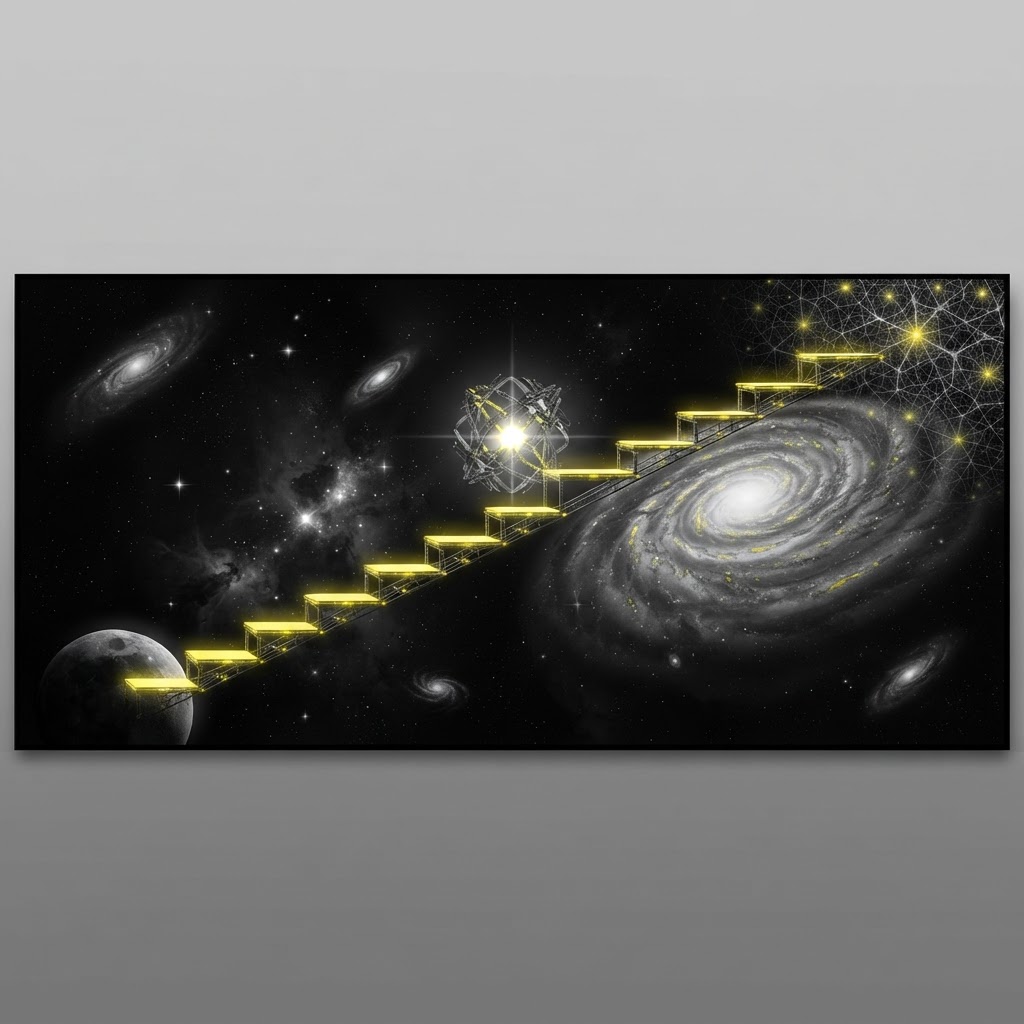
Energy curve of the scale

Vertical axis: power in watts as a power of ten. Each step multiplies energy by about 10 billion.

0123410^010^1510^3010^4510^60Humanity today

K = (log₁₀ P − 6) / 10 · Carl Sagan, 1973

The levels, one by one

Types 0-III are Kardashev's original scale, IV-V are later hypotheses, VI-VII belong to the Omegamind universe.

Pre-planetary civilization

Type 0 · Local resources

< 10¹⁶ W

Pre-planetary civilization

Uses a small share of its planet's energy, mostly fossil fuels, wood and early renewables. It is divided into competing nations.

Us, today (about 0.73). Like a family burning its furniture to stay warm: it works, but not forever.
Planetary civilization

Type I · Planet

10¹⁶ W

Planetary civilization

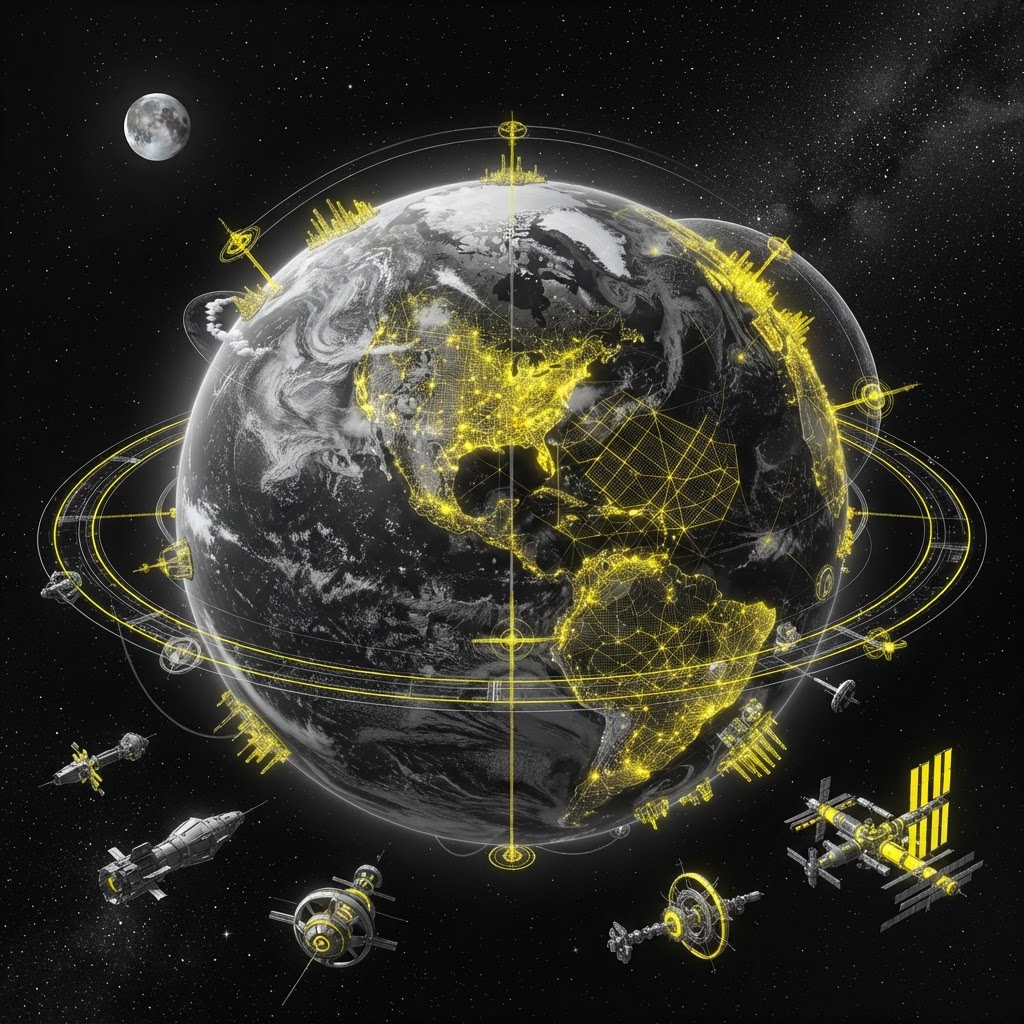
Uses all the energy reaching its planet: sun, wind, tides, geothermal, fusion. It can influence climate, predict earthquakes, govern itself as one species.

Like a well-run garden: every sunbeam is used, nothing wasted. In sci-fi: Star Trek's Earth after unification.
Stellar civilization

Type II · Star

10²⁶ W

Stellar civilization

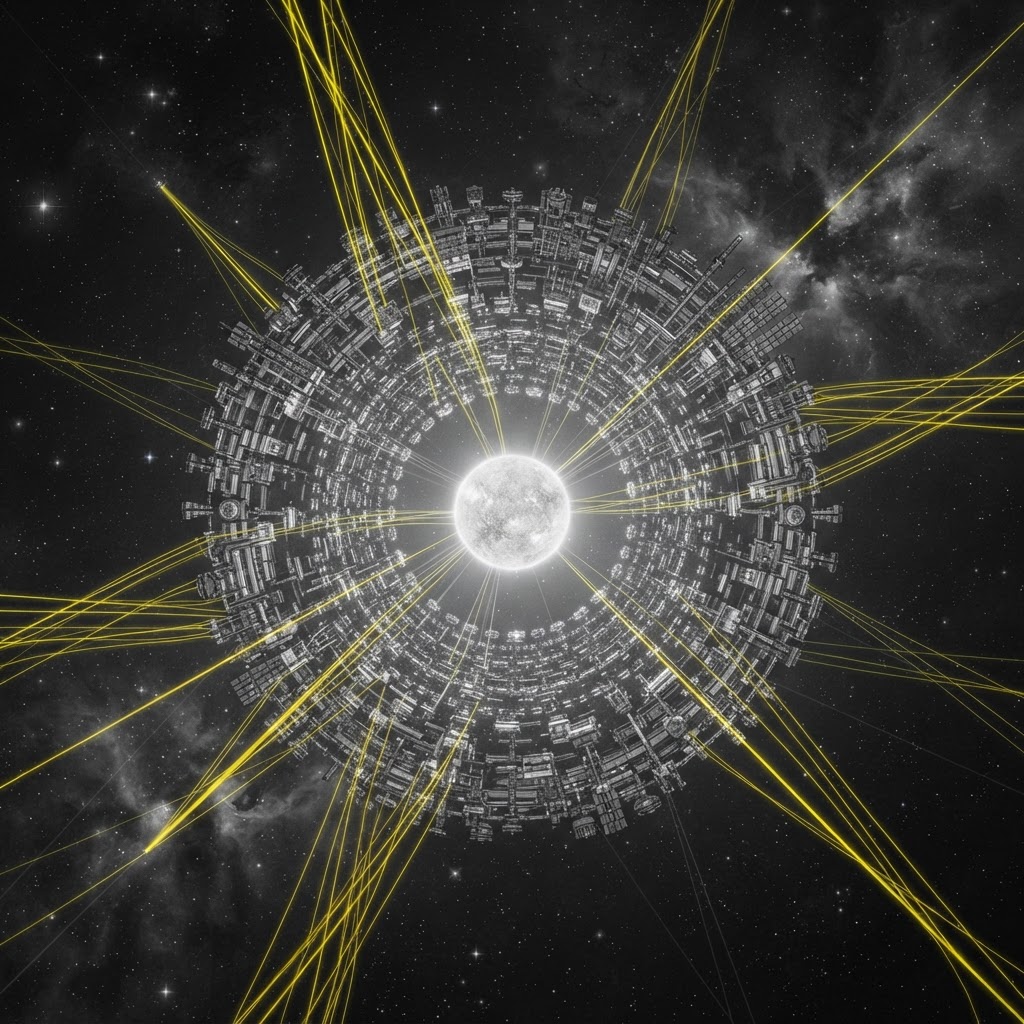
Captures its star's entire output, for example with a Dyson sphere or swarm. It colonizes its solar system and is practically immune to extinction.

Like putting a solar panel around the Sun instead of on the roof. In sci-fi: Superman's Kryptonians or a mature Federation.
Galactic civilization

Type III · Galaxy

10³⁶ W

Galactic civilization

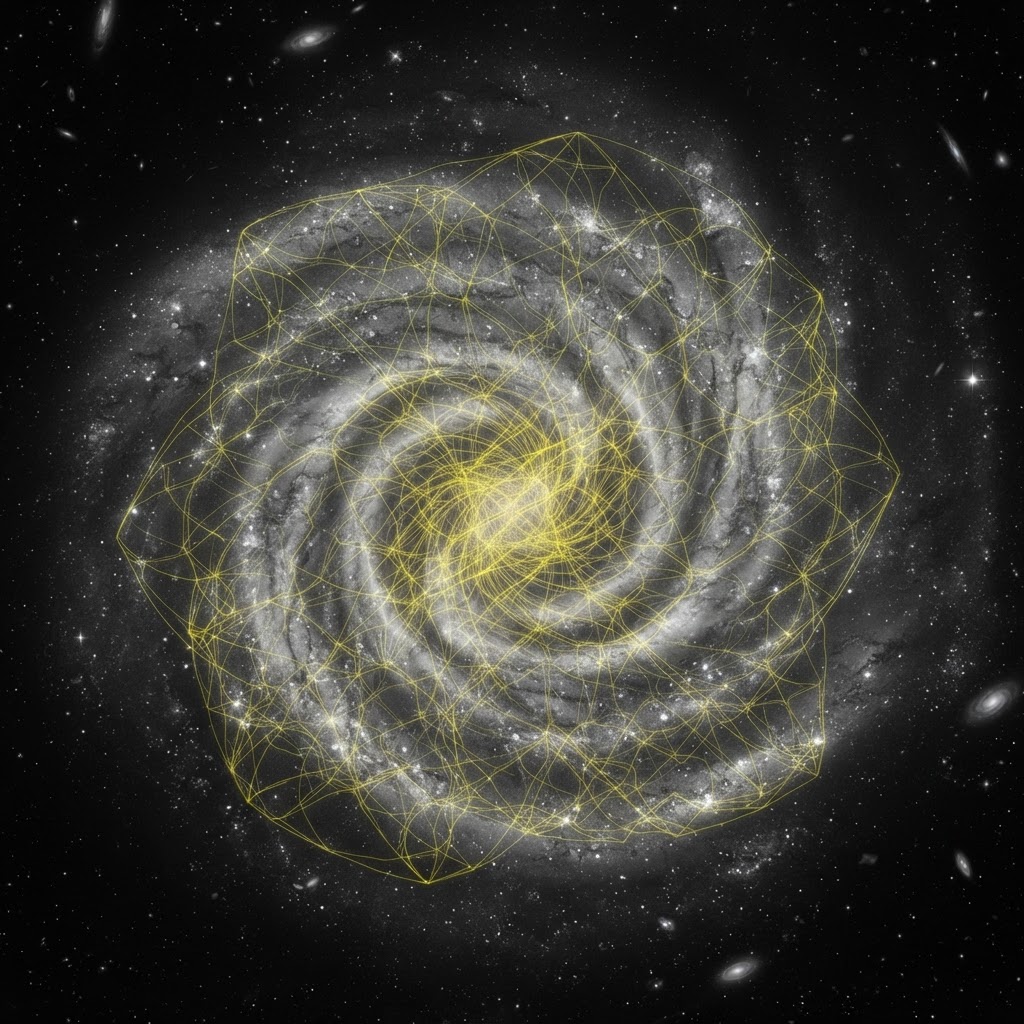
Controls the energy of billions of stars and perhaps black holes. It spans an entire galaxy, with travel times of thousands of years.

Like a power grid linking every star in the Milky Way. In sci-fi: the Star Wars Empire or the Borg.
Universal civilization

Type IV · Universe

~10⁴⁶ W

Universal civilization

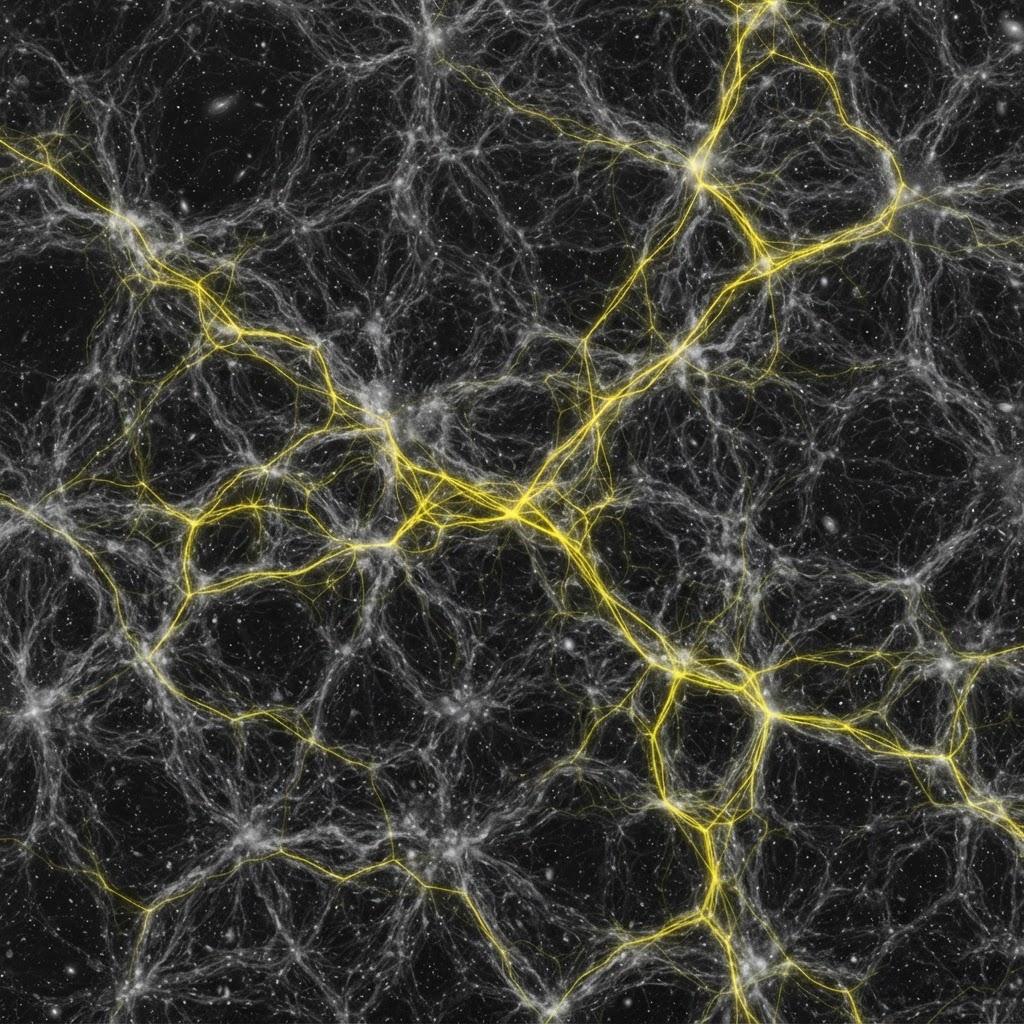
Hypothetical level: uses the energy of the whole observable universe, perhaps even dark energy.

As if the universe itself became its body. In sci-fi: Star Trek's Q.
Multiversal civilization

Type V · Multiverse

—

Multiversal civilization

Speculative: draws energy and knowledge from multiple parallel universes.

Like moving between rooms of an infinite house, where each room is a universe.
Civilization of time

Type VI · Time

—

Civilization of time

Omegamind extension: it does not only use energy but bends the sequence of events, treating time as material.

Like a director who can review, edit and correct their own story.
Creator civilization

Type VII · Creation

—

Creator civilization

Omegamind extension: consciousness becomes a generator of new physical laws and universes. It is the endpoint of the Architect's Chronicles.

Like an author who does not write inside a book, but writes the rules by which all books exist.

Kardashev and Omegamind

The Architect's Chronicles

730 narrative days taking a civilization from 0.72 to 7.0. Each chronicle records its Kardashev progress: reading them in order is climbing the scale.

The civilization database

Every civilization in the universe has a precise type and level, with energy source, social structure and crisis consistent with that step.

Thermodynamics 2.0

The manifesto reads the scale as an evolutionary law: a civilization rises only if it turns energy into shared order, not domination.

Your reader journey

Readers have a level too: reads, archetypes and contributions advance the evolutionary profile along the same steps.

The card game

Every card carries a K level: the higher, the rarer and stronger, but balance rewards synergy, not just power.

The message

Humanity at 0.73 is in the most fragile passage. Omegamind exists to spread the thinking that helps us cross it: cooperation instead of competition.